
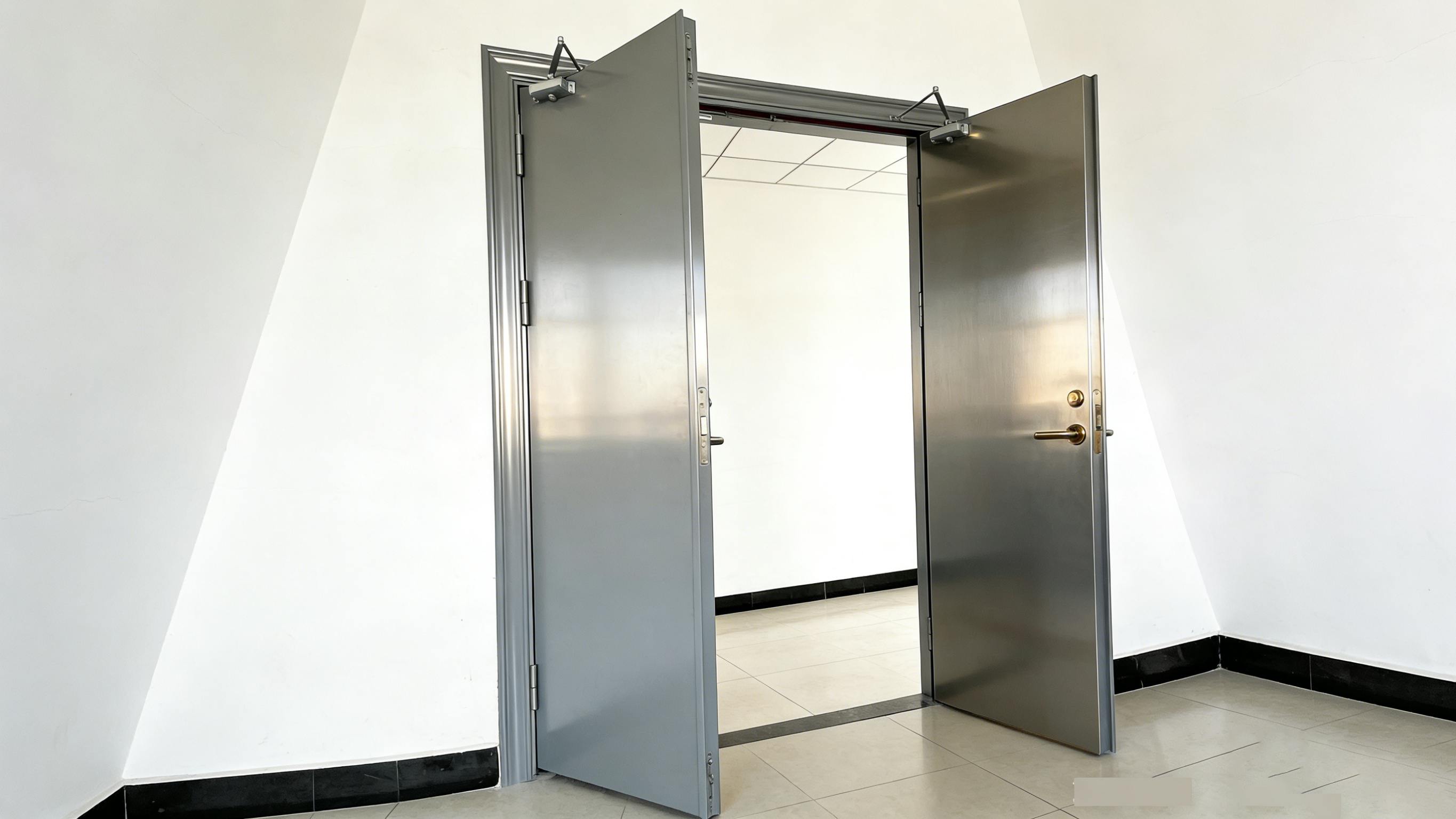
Fire doors are essential components of fire safety systems in various public spaces such as office buildings, shopping malls, hospitals, and schools. They provide reliable escape routes and protection for occupants during fires.
Core Features of Fire Doors
Fire doors on the market may appear similar but differ significantly in internal construction and performance. High-quality fire doors typically exhibit the following key characteristics:
- Eco-Friendly Fire-Resistant Core Material: Uses materials like new environmentally friendly perlite fireproof boards as internal filling, ensuring both fire safety and environmental sustainability.
- Dedicated Fire-Rated Hardware: Equipped with high-temperature-resistant fire hinges, allowing normal operation even under extreme heat.
- Fire and Smoke Sealing System: The door frame is fitted with intumescent seals that expand under high heat, effectively blocking smoke and flames.
- Durable Outer Layer: The door surface is often made of materials such as galvanized steel plates, providing high strength, corrosion resistance, and extended service life.
Wide Application Scenarios
Fire doors are integral not only to industrial settings but also to daily life:
- Public areas like shopping malls, airports, and train stations.
- Emergency evacuation routes within buildings.
- Critical facilities such as hospitals and schools to protect patients, children, and staff.
- Warehouses and industrial production areas to safeguard goods.
Any location with high human occupancy requires reliable fire doors to ensure safe evacuation during emergencies.
Frequently Asked Questions
Q1: What is a fire door?
A fire door is specially designed to contain flames and smoke for a specified duration, providing valuable time for safe evacuation.
Q2: How do fire doors differ from ordinary doors?
Fire doors use specialized materials (e.g., fireproof boards), hardware (fire-rated hinges), and sealing systems (intumescent seals). Their fire integrity and insulation performance far exceed those of ordinary wooden or steel doors.
Q3: Do office buildings require fire door installation?
Yes. All public spaces, including office buildings, shopping malls, schools, and hospitals, must install compliant fire doors in specific locations (e.g., stairwells, fire compartments) according to fire codes and regulations.
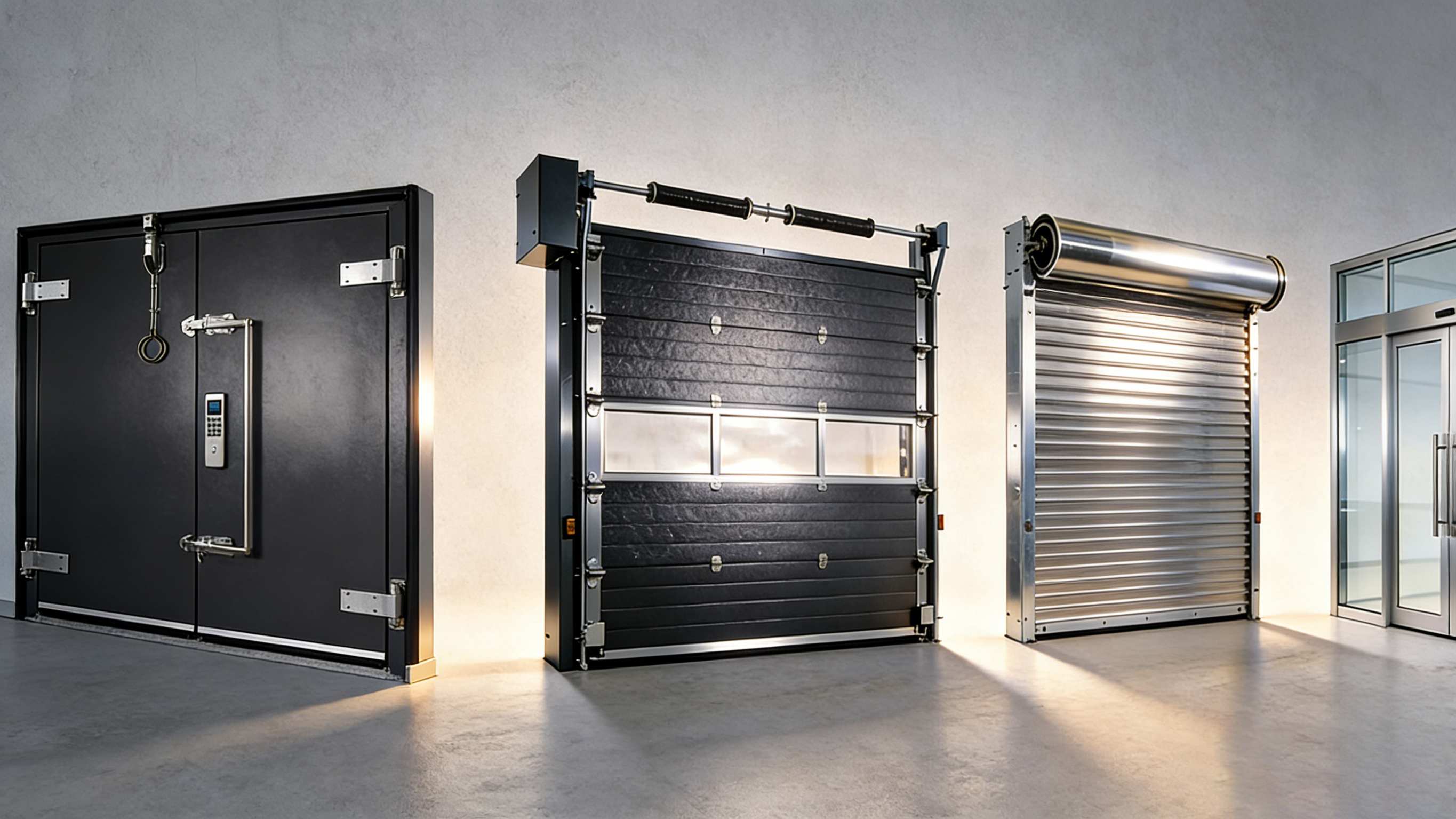
Q4: Besides fire doors, what other common industrial doors are there?
Common industrial doors include:
- PVC High-Speed Roller Doors: Suitable for logistics passages and warehouses requiring frequent access.
- Aluminum Alloy Spiral High-Speed Doors: Combine aesthetics and durability, often used in modern factories and automobile showrooms.
- Cold Storage Rapid Insulated Doors: Designed for cold chain environments to maintain stable internal temperatures.
Q5: How to choose a high-quality fire door?
Select products compliant with national mandatory certification standards (e.g., fire product certification). Prioritize reliable fire resistance, durability, environmental friendliness, and ease of operation during emergencies. Choosing a qualified and reputable supplier is crucial.